
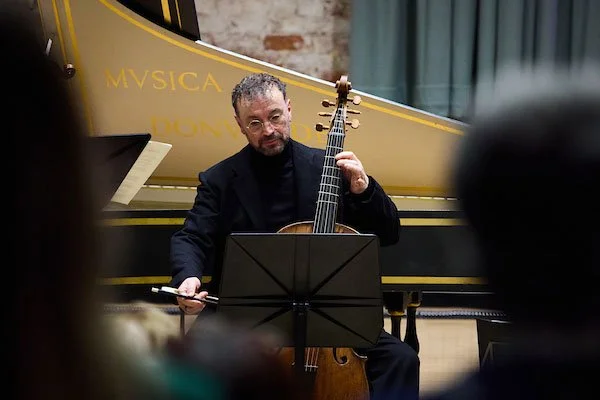
Meet David
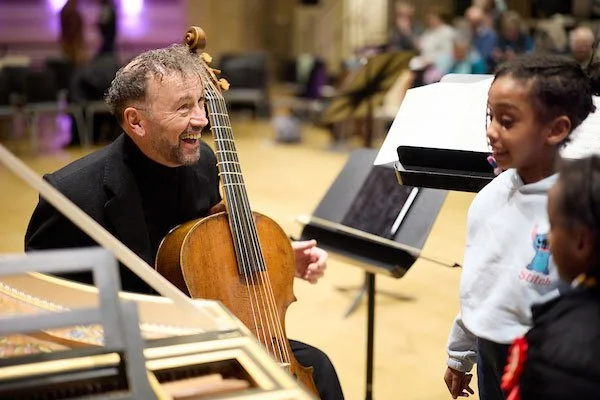
Meet David Hatcher, viola da gamba player and cellist.
Do you remember your first exposure to historical performance on period instruments?
“I was on holiday with my parents and about 16 years old. We were in a very rainy Falmouth and in desperation (inspired by boredom and the rain) I went into a record shop. I saw a Turnabout label recording of Handel harpsichord suites played by Janos Sebastyn. I simply liked the photograph on the cover, which was of a very ornate 18th century harpsichord. I didn’t really know what it was - I certainly hadn’t started playing anything at that stage. It was the days when you asked them to play it while you stood in a booth and listened to it. I was so moved that I got them to play it over and over again. I still have the LP, but I also have a remastered digital copy as well now. By modern standards of historically informed performance, it isn’t supposed to be very good, but I still find it absolutely thrilling.”
What attracts you to historical performance and playing on period instruments?
“I enjoy the vocal quality of early repertoire, which seems to speak to me in a way later music (late 18th century and onwards), rarely does. I actually entered music college as a modern flute player, but even then, I always tended to play early repertoire. I didn’t take long for me to switch to the early music department, and then to take up gamba (followed bye cello). I have always been very attracted to early renaissance music and I find particular pleasure in hearing it played on instruments of that period. Of course, we can’t be certain at all that the sounds we are making would have been appreciated by 15th or 16th century listeners. Despite that, I do think that using the tools available to players of the time is a good starting point, from which we can then explore the possibilities that they offer, in combination with careful reading of contemporary descriptions of how to perform. Trying to recreate the aesthetics of a distant past is probably futile. In any case, much of the way we present music to audiences now would surely have seemed very strange indeed to the educated elites of those earlier times. The idea of paying money to sitting for a couple of hours in rapt silence is, I suspect, a very modern one.”
Do you have a favourite composer?
“I have always found Handel extremely attractive. I have a notion that he was a very moral and decent man and I find his humanity shining through all his music. I play Messiah a number of times every year and I never fail to be utterly inspired by it. As a bass instrument player, his music is a wonderful gift to play.”
What is your most memorable moment with the ensemble so far?
“I think the Passions - both St John and St Matthew, are bound to come out on top. It is such a privilege to be able to play such profound music with such gifted players and singers in the wonderful setting of Manchester Cathedral.”
What do you enjoy doing outside of music making?
“I ride regularly throughout the week. He's a fairly old dobbin of a horse now, but he has given me enormous pleasure over the last twenty or so years. I also get a lot of satisfaction from singing. It’s a bit of a busman’s holiday I suppose, but I have organised a small chamber choir with whom I sing renaissance polyphony. This allows me access to a wonderful repertoire of music that I would otherwise not get to perform. We sing mostly in Leominster Priory, which has a fantastic Norman nave with one of the best acoustics I have come across anywhere. When the weather is bad (is it ever good these days?), I enjoy reading Japanese haiku. Japanese has been my home language for the last 36 years (my wife is Japanese and we lived there for ten years at the start of our marriage), so the challenge of really understanding these minimalist works of art is very fulfilling. I’m also a bit of an amateur tailor.”